
Drug Test Dip Cards for High-Volume, Cost-Sensitive Programs
Compact dip cards that deliver the same lab-grade screening chemistry as a cup at a fraction of the cost per test — ideal when you screen often and watch every dollar.
What sets these apart
Flood-proof housing
Each strip is sealed at a fixed immersion depth, so over- or under-dipping can't wash out or starve the result — the top cause of invalid cards.
Compact footprint
A flat card stores in a fraction of the space of a cup — ideal for mobile collectors, satellite offices, and high-volume programs.
Single or multi-panel options
Run a broad multi-panel screen or add a focused single-analyte card for ETG, fentanyl, kratom, or nicotine.
25-test boxes
Sold in tidy 25-test boxes that make par-level inventory and reordering simple for busy programs.
Low per-test cost
Same immunoassay chemistry as a cup without the container or lid, so your per-screen cost drops at scale.
Long-dated stock
Foil-pouched cards carry long shelf life so bulk boxes stay usable through slower months.
Shop Drug Test Dip Cards
All products are FDA-cleared and ship same-day on orders placed by 3pm ET.
11 products
 Ships Today12-panel
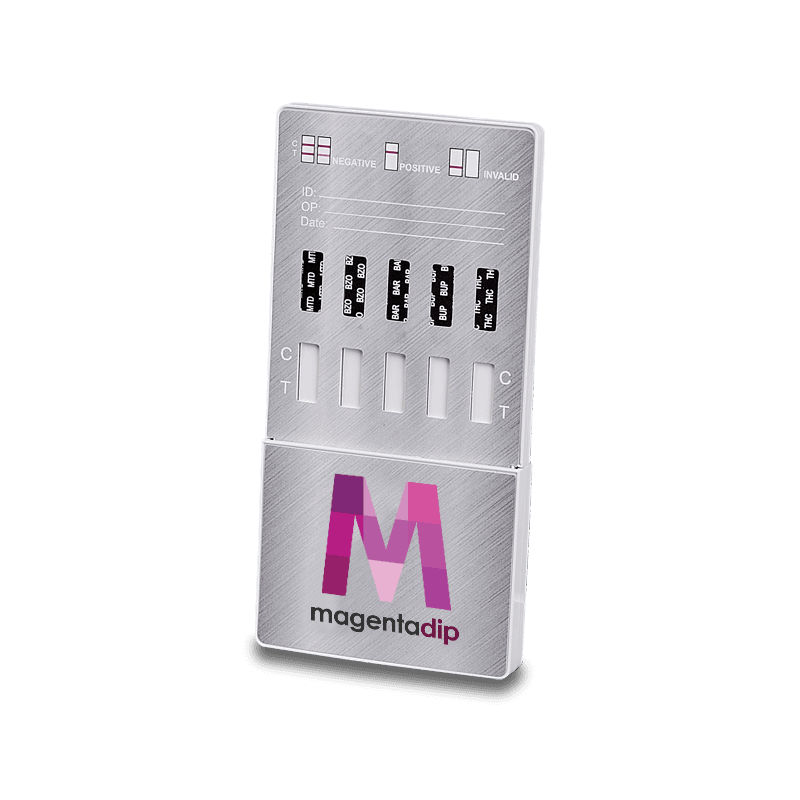
12 Panel CLIA Waived Magenta Dip Card
12-panel urine dip card screening for Amphetamine, Barbiturates, Buprenorphine, and 9 more. Manufacturer SKU MGDDOA-6125.
 Ships Today1-panel
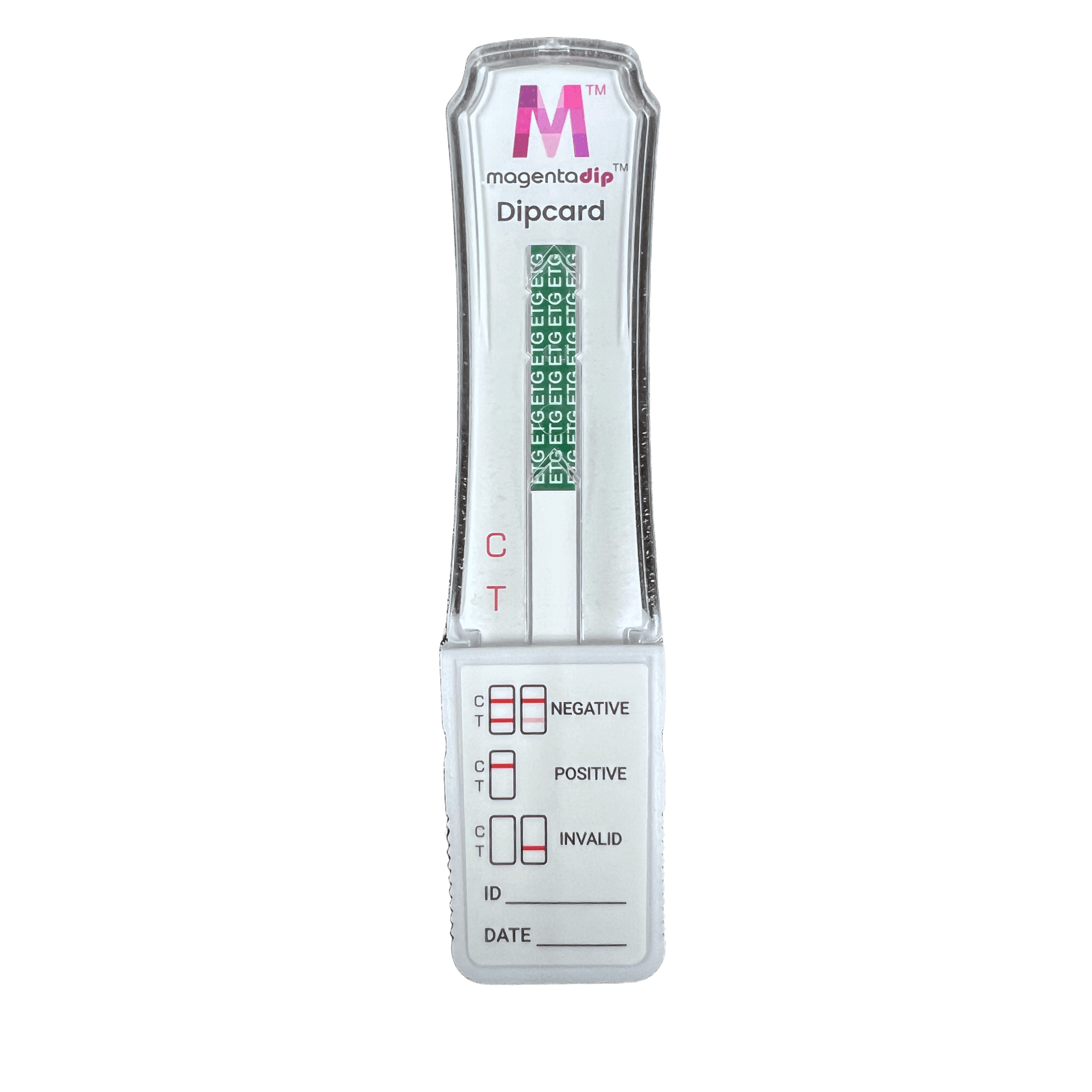
80 Hour ETG Alcohol Magenta Dip Card Flood Proof
Single-analyte urine dip card for Alcohol (EtG) at 300 ng/mL. Manufacturer SKU MGDD-ETG300.
 Ships Today1-panel
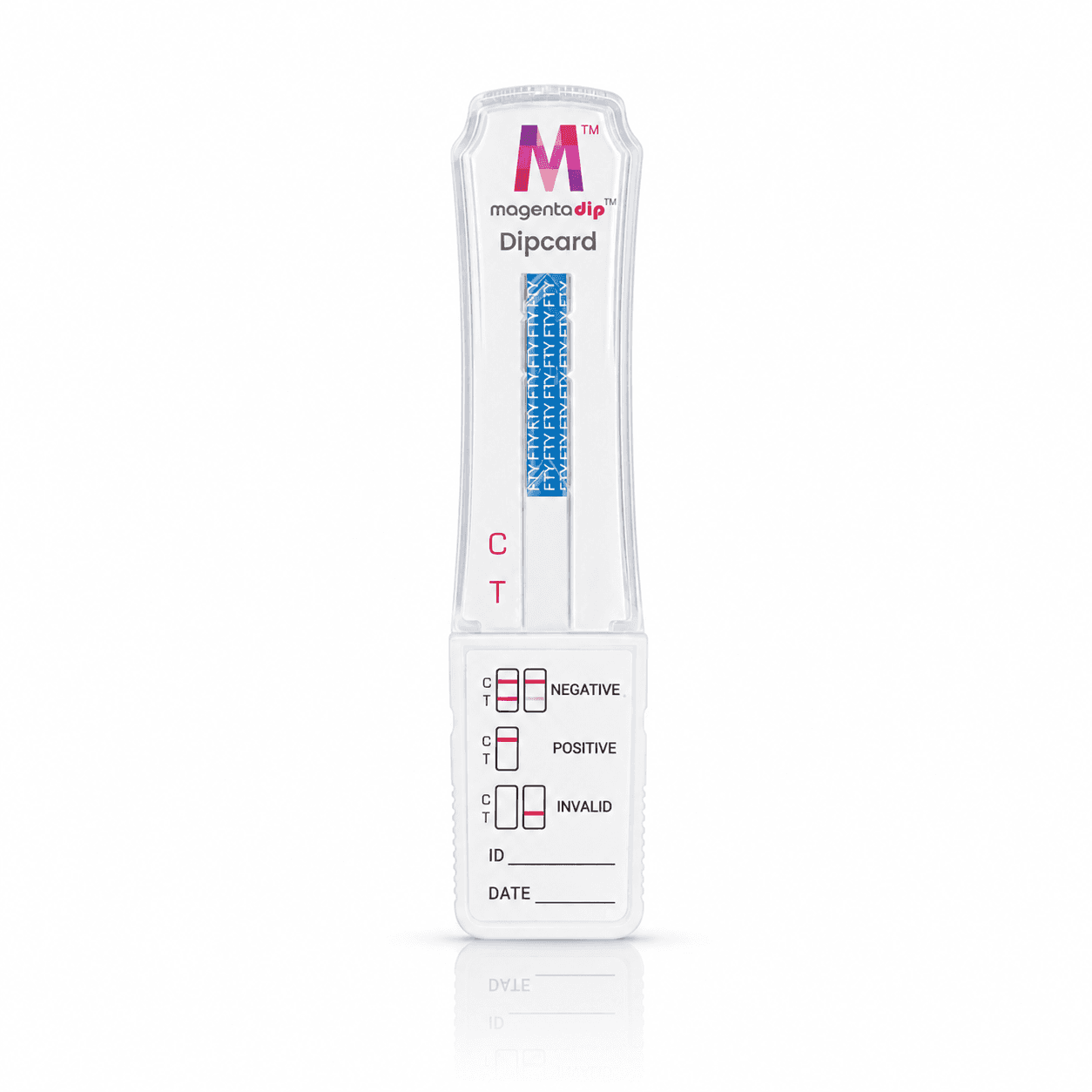
Fentanyl Urine Magenta Dip Card Flood Proof
Single-analyte urine dip card for Fentanyl (FTY) at 20 ng/mL. Manufacturer SKU MGDD-FTY.
Ships Today10-panel10 Panel CLIA Waived Magenta Dip Card
10-panel urine dip card screening for Amphetamine, Barbiturates, Buprenorphine, and 7 more. Manufacturer SKU MGDDOA-1105C.
 Ships Today14-panel
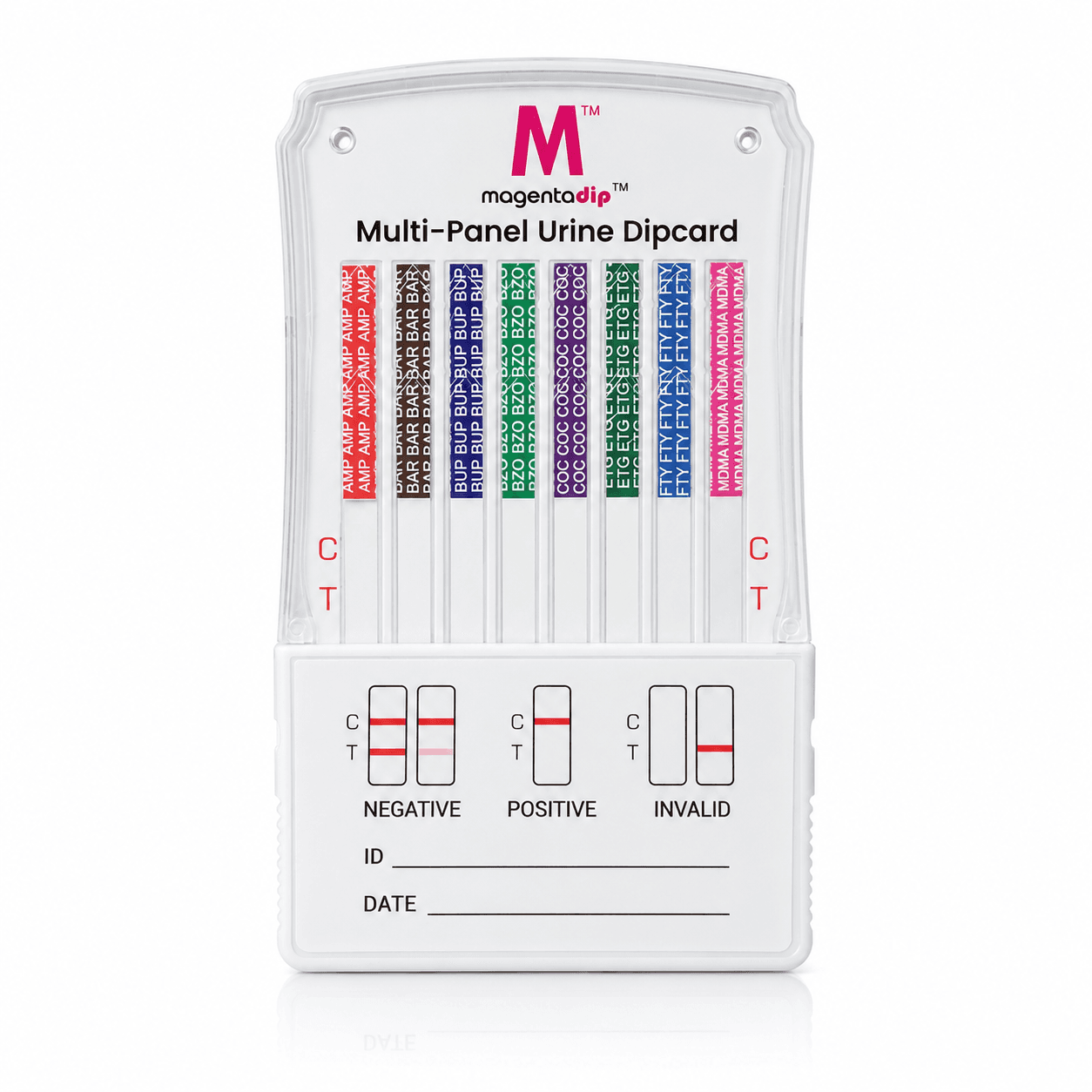
14 Panel Magenta Dip Card Flood Proof (with Fentanyl + EtG Alcohol)
14-panel urine dip card screening for Amphetamine, Barbiturates, Buprenorphine, and 11 more. Manufacturer SKU MGDDOA-8145EF.
Ships Today5-panel5 Panel CLIA-Waived Magenta Dip Card (AMP, COC, MET, OPI, THC)
5-panel urine dip card screening for Amphetamine, Cocaine, Methamphetamine, and 2 more. Manufacturer SKU MGDDOA-254.
Ships Today6-panel6 Panel CLIA-Waived Magenta Dip Card
6-panel urine dip card screening for Amphetamine, Benzodiazepines, Cocaine, and 3 more. Manufacturer SKU MGDDOA-264.
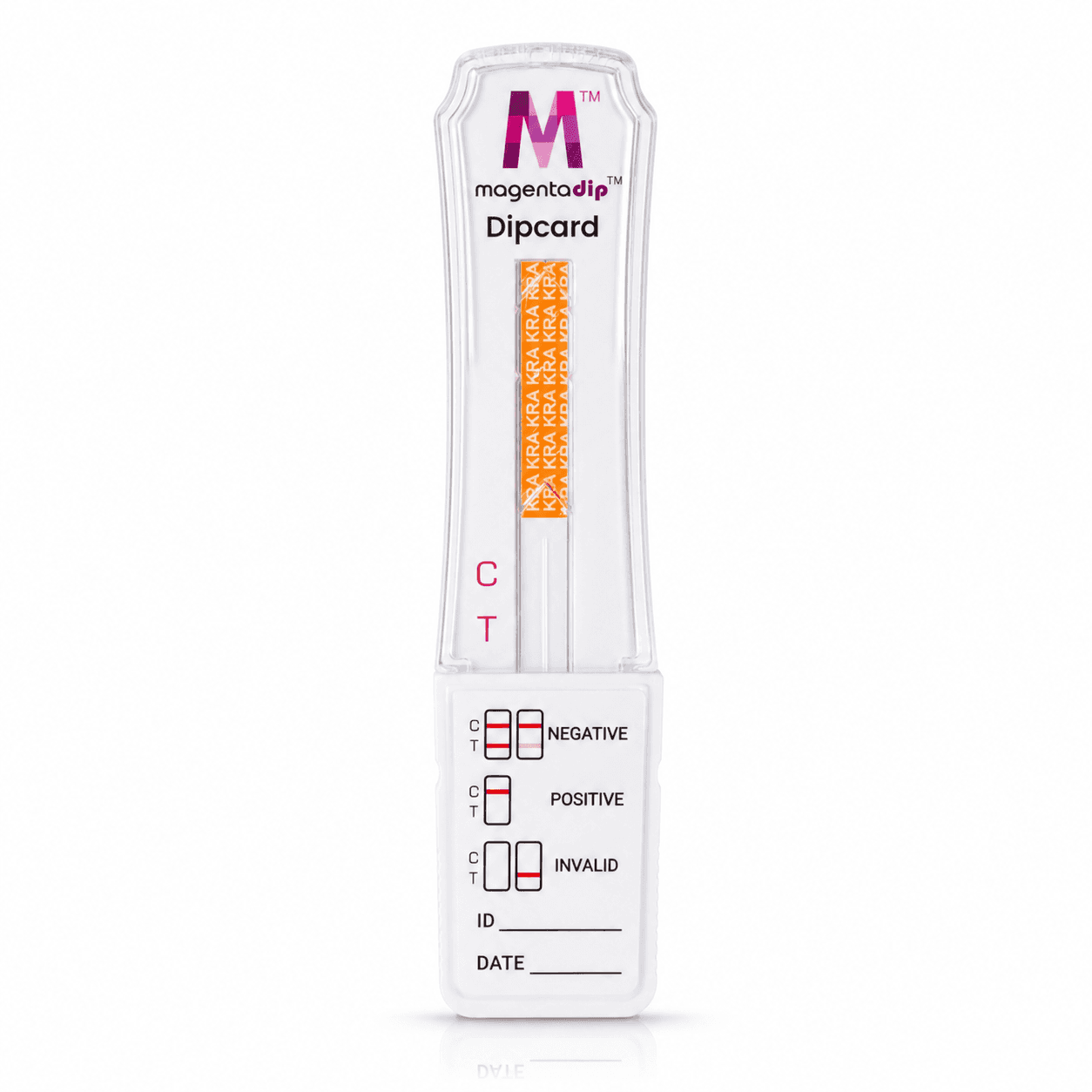 Ships Today1-panel
Kratom Magenta Urine Dip Card @ 100 ng/mL cutoff Flood Proof
Single-analyte urine dip card for Kratom (KRA) at 100 ng/mL. Manufacturer SKU MGDD-KRA.
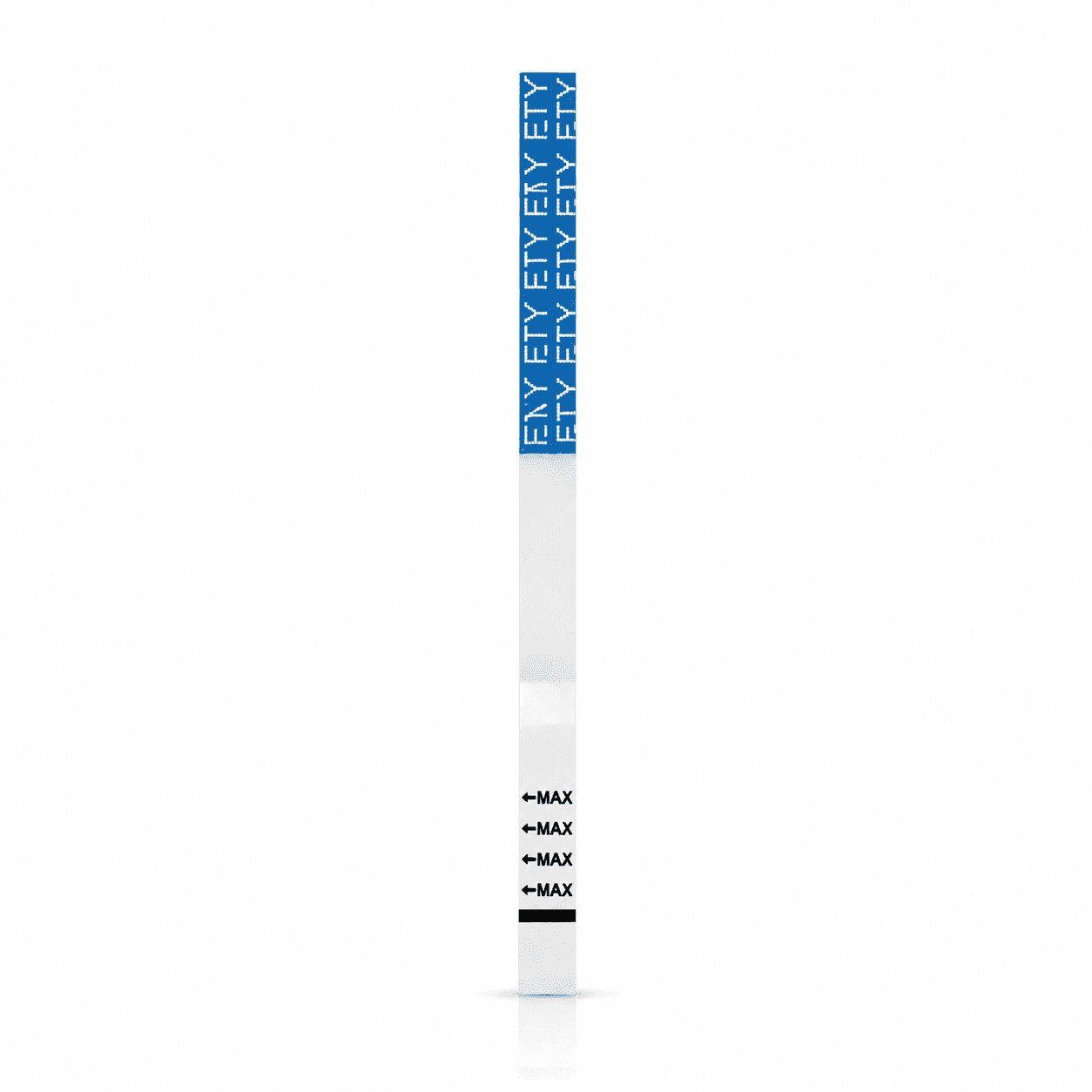 Ships Today1-panel
Magenta Fentanyl (FEN) Single Test Strip — 20 ng/mL
Single-analyte single test strip for Fentanyl (FEN) at 10 ng/mL. Manufacturer SKU MGS-FTY.
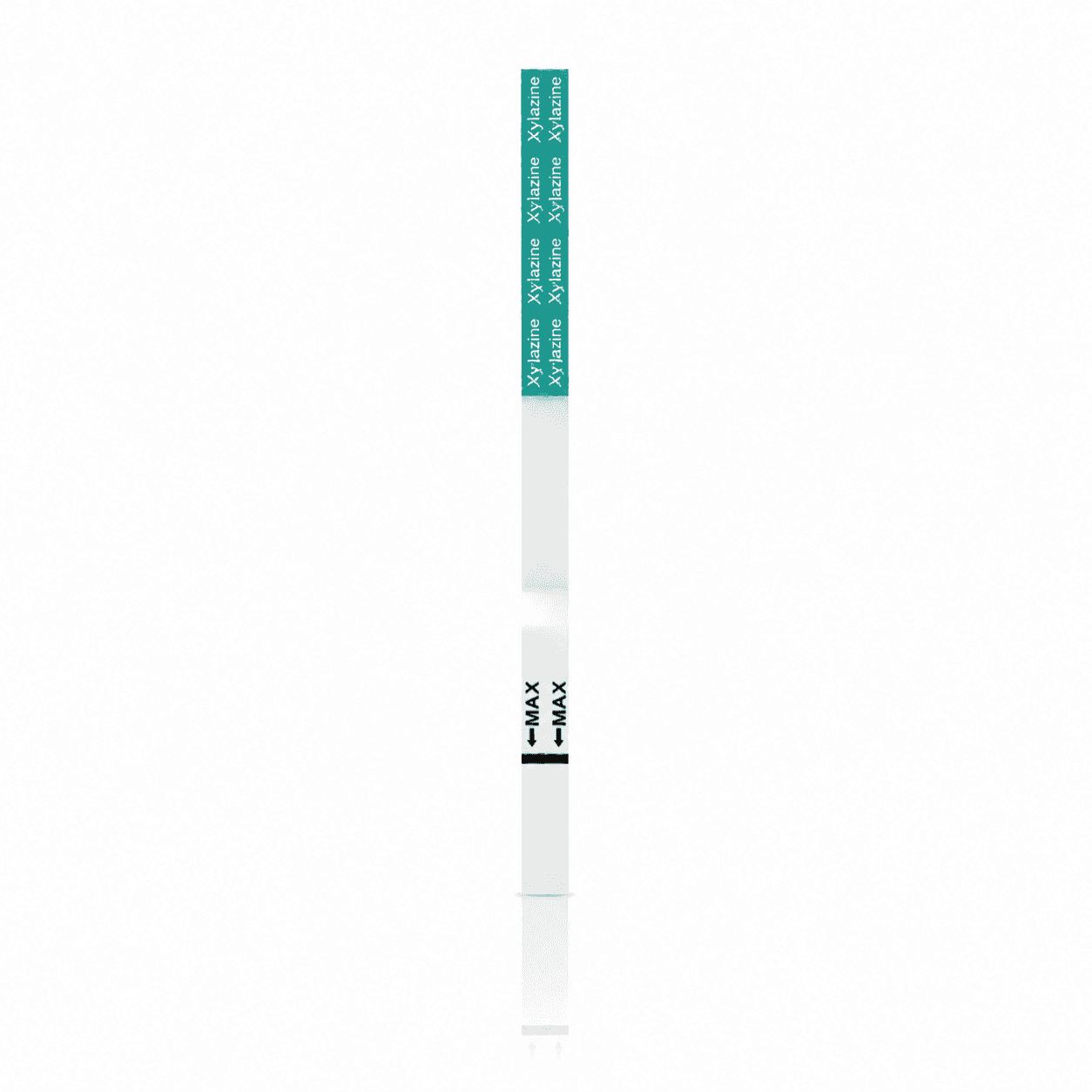 Ships Today1-panel
Magenta Xylazine (XYL) Single Test Strip — 300 ng/mL
Single-analyte single test strip for Xylazine (XYL) at 300 ng/mL. Manufacturer SKU MGS-XYL.
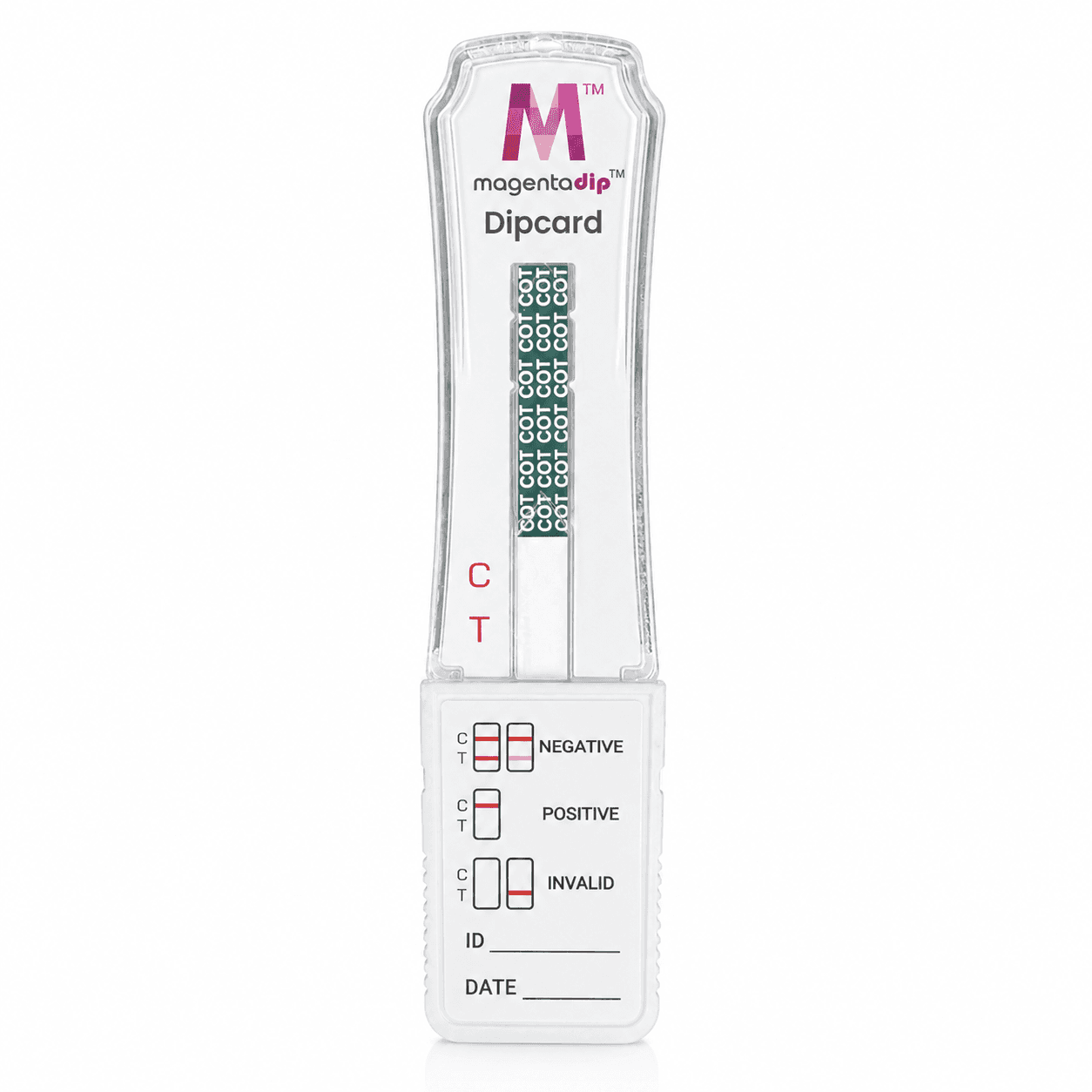 Ships Today1-panel
Nicotine / Cotinine Urine Magenta Dip Card @ 100 ng/mL cutoff Flood Proof
Single-analyte urine dip card for Cotinine (Nicotine metabolite) at 100 ng/mL. Manufacturer SKU MGDD-COT100.
In short
A drug test dip card is a flat, multi-strip test device that you dip into a separately collected urine specimen for a few seconds, then read in about five minutes. It uses the same immunoassay chemistry as an integrated cup but costs less per test and takes far less storage space. They ship in convenient 25-test boxes for easy inventory and come in both single-analyte and multi-panel formats, including specialty cards for ETG alcohol, fentanyl, kratom, and nicotine/cotinine.
Dip cards vs. cups — cost and portability tradeoffs
Dip cards win on three axes: price per test, storage footprint, and portability. Because a card is just the test device — no collection container, temperature strip, or lid — it costs meaningfully less than an integrated cup. For programs running thousands of screens a month, or for single-analyte spot checks, that per-test difference adds up quickly. A 25-test box also stores in a fraction of the space of the equivalent cups, which matters for mobile collectors and small offices.
The trade-off is workflow. A card requires a separately collected specimen, so someone has to hand over a collection cup, and the device offers no built-in temperature reading. That makes cards a better fit for self-administered or low-supervision settings, or for any program that already collects into its own container and just needs an inexpensive screen. Where observed collection and specimen-validity verification are central, a cup is the better tool.
Dip cards deliver the same screening chemistry as a cup, so when the device is dipped to the indicated max line and read within the stated window, a card and a cup return equivalent results. A clear, repeatable dipping-and-timing routine is what keeps results consistent across a busy program — and it's why high-throughput programs trust cards for routine screening.
Cards also shine for targeted, single-analyte testing. An 80-hour ETG card tells you whether someone has consumed alcohol in the recent window; a fentanyl card adds a single high-priority analyte to an existing protocol without re-buying a full multi-panel device. Building a protocol from focused cards can be more economical than running a broad panel on every donor.
Dip cards vs. cups
Cards are cheaper per test and far more compact; cups add a collection container, temperature strip, and lid for witnessed, validity-critical screening.
Multi-panel vs. single-analyte cards
Use a multi-panel card for routine broad screening; add single-analyte cards (ETG, fentanyl) to target one substance without re-buying a whole panel.
Recommended for these industries
Dip cards fit programs that screen frequently, supervise lightly, or watch the budget closely. These settings order Magenta cards most:
Sober Living
Frequent, low-cost routine screening for residences managing many tests per week.
Explore →Probation & Court-Mandated
High-volume compliance checks where cost per test and portability both matter.
Explore →Schools & Universities
Athletics and student-assistance programs needing affordable, discreet spot checks.
Explore →Staffing Agencies
Pre-placement screening across many candidates and locations on a tight cost basis.
Explore →Bulk & wholesale pricing
Dip cards are where volume pricing pays off fastest, because the per-test cost is already low and drops further as you scale. Pricing is quoted per individual test while cards sell in 25-test boxes, so even a few boxes can clear the first tier threshold. A typical schedule runs four tiers — a starter tier for 25–100 tests, a mid tier for 125–500, a program tier for roughly 500–2,000, and a contract tier above that — with the unit price stepping down at each level. The discount is automatic in the cart, which always quotes the lowest tier your quantity qualifies for; there's no coupon to remember. Approved wholesale accounts can add negotiated per-item rates, and you're always charged the lower of the tier price or your account rate. For standing high-volume programs, request a bulk quote and we'll set a tier around your real monthly usage so your cost stays predictable.
Compliance & certifications
Standard Magenta dip cards are FDA 510(k) cleared and CLIA waived, so a site holding a CLIA Certificate of Waiver can run them without high-complexity personnel. As with cups, waiver status attaches to specific analyte-and-matrix configurations; each product page lists the status for that card. Drug-of-abuse cutoffs follow SAMHSA guidelines where a federal cutoff exists and use the manufacturer's validated cutoff otherwise.
A few specialty cards in this category are single-analyte harm-reduction tools rather than conventional employment screens. Fentanyl and ETG cards screen for one high-priority analyte; harm-reduction single-test strips for substances such as xylazine are sold for screening and harm-reduction purposes and are not all CLIA waived. Read the individual product page for the regulatory status and intended use of any specialty card before deploying it in a regulated program.
Every dip card is a screening device. A non-negative is a presumptive positive that must be confirmed by an accredited laboratory using GC/MS or LC/MS-MS before it informs any clinical, employment, or legal action. Because the specimen is collected separately, maintain your chain-of-custody documentation on the collection container, not the card.
For in vitro diagnostic screening use. A positive screen is presumptive; obtain laboratory confirmation before any medical, employment, or legal decision.
Frequently asked questions
How do I read positive and negative results on a dip card?+
Each analyte has a test line (T) and a control line (C). A visible control line confirms the test ran correctly. For each drug, any visible test line — even a faint one — means negative (below cutoff); no test line means presumptive positive (at or above cutoff). If the control line never appears, the test is invalid and should be repeated with a new card. Always read within the stated window, usually around five minutes.
Are dip cards as accurate as cups?+
Yes — a dip card and an integrated cup use the same immunoassay chemistry and the same cutoffs, so their screening accuracy is equivalent. The difference is workflow and verification hardware: a cup adds specimen-temperature reading and a sealed collection container, while a card relies on a separately collected sample. For the actual drug detection at the cutoff, the two formats perform the same.
What's the difference between single-analyte and multi-panel dip cards?+
A multi-panel card screens for several substances at once and is the workhorse for routine broad screening. A single-analyte card targets one substance — for example an 80-hour ETG alcohol card or a fentanyl card — so you can add a focused screen to an existing protocol without re-buying a full panel. Many programs stock both.
Do dip cards require a CLIA waiver?+
To run CLIA-waived dip cards for testing other people in the United States, your site generally needs at least a CLIA Certificate of Waiver. The card itself is cleared as waived in its standard configuration, but the waiver is a property of your testing site, not the device. Single-analyte harm-reduction strips may have a different intended-use status — check the product page.
What is an 80-hour ETG alcohol card?+
ETG (ethyl glucuronide) is a direct metabolite of alcohol that remains detectable in urine far longer than alcohol itself — up to roughly 80 hours after consumption, depending on the amount. An ETG card is the standard tool for abstinence-monitoring programs where you need to detect drinking that occurred days earlier, well beyond what a breathalyzer or standard alcohol test would catch.
How should dip cards be stored?+
Keep cards sealed in their foil pouches at room temperature, away from direct sunlight, heat, and freezing. Let a refrigerated pouch return to room temperature before opening to avoid condensation on the membrane. Use each card promptly once the pouch is opened, and don't use any card past the printed expiration date.
Screen more for less.
Lock in volume pricing on the formats you run every day, or open a wholesale account for net terms and negotiated rates.
Explore other categories
Drug Test Cups
All-in-one integrated urine cups that collect, test, and read in a single sealed device — built for high-volume programs that can't afford a recollect.
View →Oral Fluid (Saliva) Drug Tests
The D-Pen combines collector and test device in one unit — collect saliva in plain sight, with no bathroom, no pour, and no separate swab to manage.
View →Flowflex Respiratory Home Tests
One nasal swab, one device, four answers in 15 minutes — distinguish RSV, influenza A, influenza B, and COVID-19 without a clinic visit.
View →DNA Tests
At-home paternity and relationship DNA testing.
View →