
Workplace Drug Testing Supplies for HR Teams
Pre-employment, random, post-accident, and reasonable-suspicion kits for non-DOT employers — sized for everything from a 20-person small business to a 5,000-employee manufacturer.


The Workplace Drug Testing Challenge
Most employer testing programs grow up incrementally. Pre-employment testing starts because the legal team or insurer asks for it. Random testing comes in when an incident exposes the gap. Post-accident protocols get formalized after a workers' comp claim raises questions. Reasonable-suspicion training happens after a manager makes a judgment call that doesn't hold up. By the time HR is running the program intentionally, it's already a mix of vendors, forms, and procedures stitched together from different decisions made years apart.
The supply problem is recognizable: a clinic-collection contract for pre-employment because that's how it was set up in 2014, plus instant cups bought in small lots from a big-box online retailer for the random and reasonable-suspicion tests run on-site, plus a third vendor for the chain-of-custody forms because the lab requires its own. Per-test cost is double what it should be at the volume the company actually orders, and the HR generalist running the program loses an afternoon a quarter chasing reorder paperwork and approving expense reports.
There's also a policy-versus-practice gap. The handbook says the company tests for marijuana, but state law in California, New York, New Jersey, Connecticut, Washington, and a growing list of jurisdictions now limits how employers can use a positive THC result — particularly for off-duty use. The HR director knows the policy needs updating but hasn't done it. The kits the company buys still test for THC because that's the standard 5- or 10-panel, and the decision about what to do with a positive gets made case-by-case. A consolidated supplier conversation that includes panel choice — 9-panel without THC, 10-panel with, fentanyl add-on — is the moment to actually tighten the policy.
How Magenta Helps Workplace HR Teams
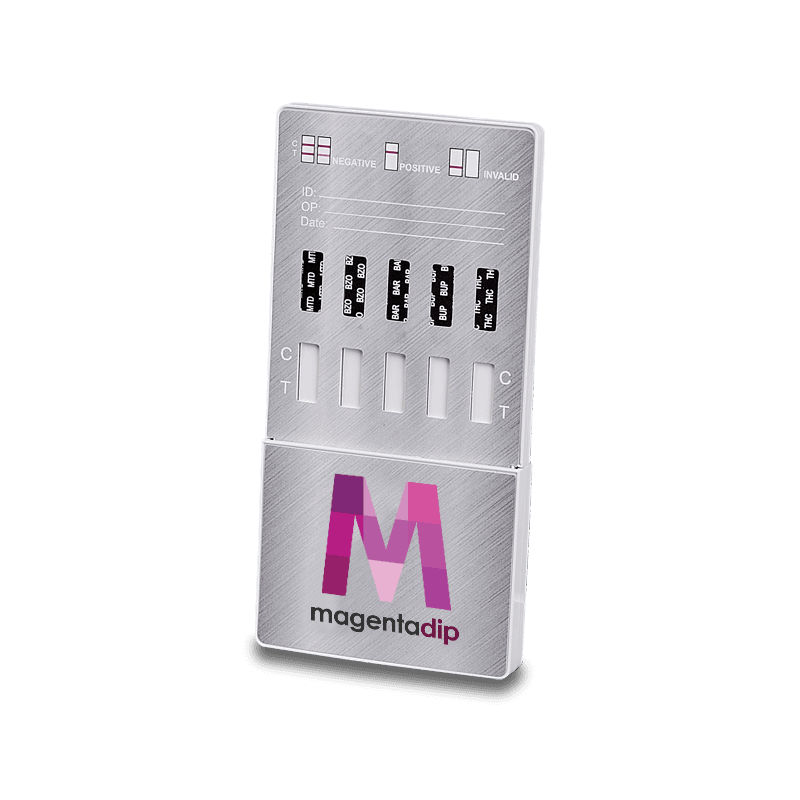
Magenta serves the part of the workplace-testing market that's too big for retail and too small for a national TPA contract: companies with 50 to 5,000 employees that run their own program, with HR or facilities owning it day-to-day. Our 10-panel CLIA-waived dip card is the most common workhorse — it screens for the standard SAMHSA 5 plus benzodiazepines, methadone, oxycodone, MDMA, and barbiturates, ships in 25-count packs, and sits at a price point that lets a 200-person company run a real random program without budget conversations every quarter.
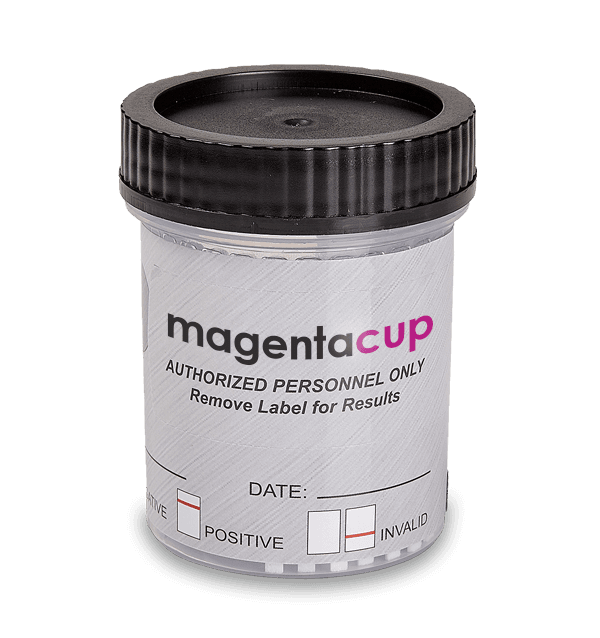
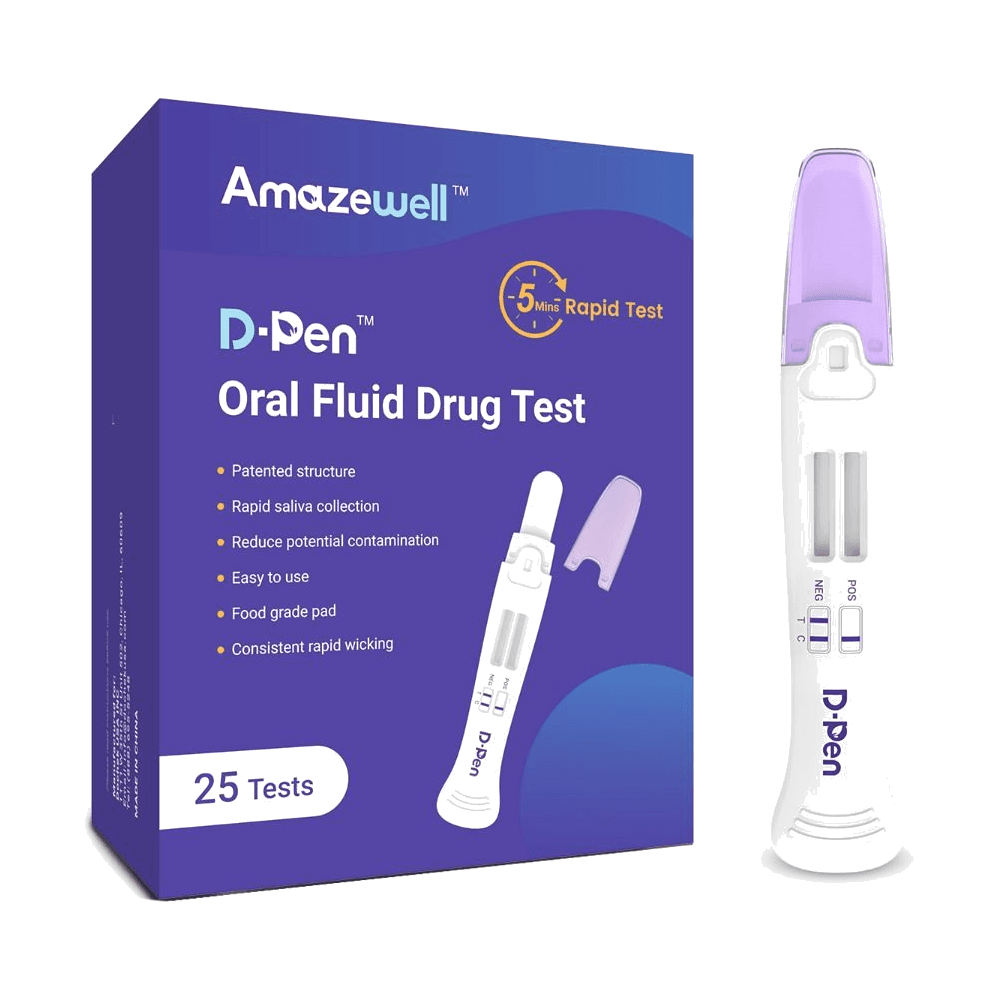
For companies in jurisdictions with marijuana-use restrictions or that have intentionally moved away from THC testing for non-safety-sensitive roles, we stock dedicated no-THC and saliva options. Saliva tests are particularly useful for post-accident and reasonable-suspicion testing because the detection window for most drugs is the past 24-48 hours — which actually answers the question the employer needs answered (was this person impaired at work?) rather than the question urine answers (have they used in the past 30 days?). For fentanyl-aware testing programs, our 13-panel and 14-panel cups add fentanyl to the standard panel without requiring a separate dip strip.
On the operations side, we set HR teams up with the things that make a program actually run on a Tuesday afternoon. Wholesale tiered pricing kicks in at meaningful volumes and adjusts automatically — no emails to a rep, no quote requests for reorders. NET 30 invoicing on approved accounts means HR isn't asking a manager to put $800 of kits on a corporate card. Same-day shipping on orders placed before 3pm ET means an emergency post-accident situation Friday morning has kits Monday. Recurring subscription orders auto-deliver weekly, biweekly, or monthly with an additional 5-10% off, and HR can pause or change the cadence from the account dashboard without contacting support.
For HR teams that prefer one supplier for both on-site testing and lab confirmation, our reference-lab program supplies appropriate chain-of-custody documentation and MRO services. Companies that already have a lab and MRO relationship can buy kits-only at the same wholesale pricing — there's no kits-plus-lab bundle requirement.
Recommended Products for Workplace
The panels and form factors workplace hr order most.
Compliance Considerations for Workplace Testing
Workplace drug testing for non-DOT employers operates in a layered legal environment shaped by federal anti-discrimination law, state-specific testing statutes, local marijuana laws, and the employer's own written policy. There is no single federal regulation comparable to 49 CFR Part 40 — instead, the ADA (Americans with Disabilities Act), Title VII, and a patchwork of state laws set the boundaries. A written drug testing policy that's been reviewed by employment counsel for the specific states you operate in is the single most important compliance document a workplace testing program has.
State drug-testing laws vary significantly. Some states (Arizona, Florida, Mississippi, Ohio, others) operate "drug-free workplace" certification programs that grant workers' compensation insurance discounts for employers who follow the statute's specific requirements — written policy, supervisor training, employee notification, lab confirmation of positives. Other states (California, Maine, Connecticut, Vermont, Rhode Island, Minnesota, others) substantially restrict pre-employment testing, random testing, or both for non-safety-sensitive positions. A growing list of jurisdictions (California, New York, New Jersey, Washington, DC, others) limit employer use of off-duty marijuana use as a basis for adverse employment action.
Pre-employment testing is the most legally settled use case for most employers — typically conducted after a conditional offer of employment and made contingent on a negative result, with the candidate informed in writing. Random testing requires more careful design: the selection process must be genuinely random (no supervisor selection), documented, and applied to all employees in the testing pool. Post-accident testing should be tied to a written threshold (typically: any accident requiring medical treatment beyond first aid, any vehicle accident, any accident causing property damage above a stated dollar threshold) rather than discretion-by-incident.
Reasonable-suspicion testing is where most programs are exposed. The supervisor making the call needs documented training on observing and recording specific, articulable signs of impairment — slurred speech, smell of alcohol, unsteady gait, behavioral changes. The decision should be documented in writing before the test is conducted, ideally with a second supervisor's concurrence, and the test should follow the same chain-of-custody and lab-confirmation procedure as any other workplace test. A reasonable-suspicion positive that ends in termination and a wrongful-termination suit will turn on whether the supervisor's documentation holds up — and whether the company followed its own written policy.
Key regulations and standards
- ADA (Americans with Disabilities Act) — Current illegal-drug use is not protected; alcohol use and history of addiction are protected disabilities — implications for how positives are handled.
- Title VII — Testing programs must be applied uniformly without discriminatory disparate impact.
- State drug-free workplace acts — State-specific statutes (AZ, FL, MS, OH, others) that grant workers' comp discounts in exchange for following specific testing-program requirements.
- State testing-restriction laws — States like CA, ME, CT, VT, RI, MN restrict pre-employment or random testing for non-safety-sensitive roles.
- State marijuana-use laws — CA, NY, NJ, WA, DC and others restrict use of off-duty marijuana as basis for adverse employment action.
- FMLA / OSHA recordkeeping — Post-accident testing intersects with OSHA's anti-retaliation guidance and may affect FMLA leave determinations.
Employment drug-testing law varies significantly by state and locality, and is changing rapidly in marijuana-related areas. This information is for general guidance only — consult qualified employment counsel licensed in the states where you operate before finalizing or changing your testing policy.
"Multi-state employers consistently tell us the same thing: the cost of the kits is the smallest line item in the program. The real spend is the HR hours absorbed by managing two clinic-collection contracts, a separate on-site kit vendor, a chain-of-custody form supplier, and an MRO relationship. Consolidating those onto one wholesale account — with one rep, one invoice, one panel decision — recovers more hours per quarter than any per-test discount."
Frequently Asked Questions
Can my company still test for marijuana?+
It depends on the state, the role, and how you use the result. Federal law and most state laws still allow employers to test for THC. However, a growing number of jurisdictions — California, New York, New Jersey, Washington State, Washington DC, and others — substantially restrict an employer's ability to take adverse employment action based on a positive THC test for off-duty use, especially for non-safety-sensitive positions. Safety-sensitive roles (DOT-covered drivers, federal contractors, certain healthcare positions) have stronger ongoing testing authority. Talk to employment counsel in each state you operate in before relying on a THC-inclusive panel for hire/fire decisions.
What panel should we use for pre-employment testing?+
Most non-DOT employers use a 5-panel or 10-panel urine test. A 5-panel covers the historic SAMHSA-5 (marijuana, cocaine, amphetamines, opiates, PCP) and is the lowest-cost option. A 10-panel adds benzodiazepines, methadone, oxycodone, MDMA, and barbiturates — meaningful for industries where prescription misuse is a real concern. For fentanyl-aware programs, a 13- or 14-panel adds fentanyl. If you operate in marijuana-restricted jurisdictions, a 9-panel that excludes THC or our saliva-based options may make more sense.
Do you handle the lab confirmation and MRO services?+
Yes, optionally. Our reference-lab program covers chain-of-custody forms, certified reference-laboratory confirmation, and qualified Medical Review Officer services for any tests you need confirmed. Most non-DOT workplace tests can be acted on as instant-cup screens if your written policy allows it; tests that may end up in unemployment or workers' comp hearings should always be lab-confirmed. Employers that already have a lab and MRO relationship can buy kits-only at the same wholesale pricing.
What's the difference between urine and saliva testing for workplace use?+
Urine has a longer detection window (typically days to weeks for most drugs, up to 30+ days for chronic THC use). Saliva detects use in roughly the past 24-48 hours. For pre-employment, urine is the standard and gives you the broader history. For post-accident and reasonable-suspicion testing — where the question is whether the person was impaired at work — saliva often answers the actual question better than urine does, and it removes the privacy concerns of urine collection.
How do random testing pools work?+
A random testing program needs a defined pool (typically all non-management employees, or a subset like safety-sensitive workers), a documented selection method that's genuinely random (a random-number generator with the employee roster, run by someone who doesn't pick the names), and an annual testing rate set in the written policy. Selected employees should be notified the day of testing and tested within a defined window. The selection records and the dates of each selection should be retained for the records-retention period in your policy — typically 3 to 7 years depending on the use case.
Are we required to lab-confirm every positive?+
Not legally required for non-DOT testing in most states, but it's strongly recommended for any positive that will be used as the basis for an adverse employment action. The instant cup gives you a presumptive positive — useful for sending an employee home pending confirmation. Lab confirmation via GC-MS or LC-MS-MS and MRO review eliminates the most common false-positive scenarios (prescribed medications, poppy-seed cross-reactivity, certain over-the-counter compounds) and gives you a defensible result if the termination is challenged. Some state drug-free workplace statutes require lab confirmation to qualify for the workers' comp discount.
What's the minimum order quantity?+
There is no minimum to open a wholesale account. Tiered pricing kicks in at 100 units of a SKU and scales meaningfully at 500 and 1,000+. A 100-employee company running a typical workplace program (pre-employment for new hires plus a 25% annual random rate) usually orders 100 to 200 cups per year and qualifies for the first wholesale tier on their first order.
Do you offer recurring subscription orders?+
Yes — once your wholesale account is approved, you can set up a recurring order at weekly, biweekly, or monthly cadence directly from the account dashboard, with an additional 5-10% off our wholesale pricing. HR teams that run a consistent monthly random testing program find subscriptions eliminate the reorder paperwork entirely; you can pause, skip, or change quantities from the dashboard.
Ready to Consolidate Your Testing Program?
Bulk pricing, NET 30 terms, and same-day shipping on the panels HR teams actually order — with optional lab confirmation and MRO services on the same account.
Related Industries
DOT Transportation
49 CFR Part 40-compliant testing supplies for commercial drivers and safety-sensitive roles.
Explore →Staffing Agencies
High-volume pre-employment screening supplies for staffing firms placing contingent and temp workers.
Explore →Government & Military
Federal Drug-Free Workplace Program supplies for government agencies, contractors, and military commands.
Explore →Hospitals & Medical
Staff testing, emergency-department toxicology, and outpatient-clinic supplies for hospitals and medical facilities.
Explore →