
Drug Testing for Hospitals & Medical Facilities
Pre-employment, fitness-for-duty, and reasonable-suspicion testing for clinical staff — plus emergency-department toxicology screening, peri-natal screening, and outpatient-clinic supplies on one account.

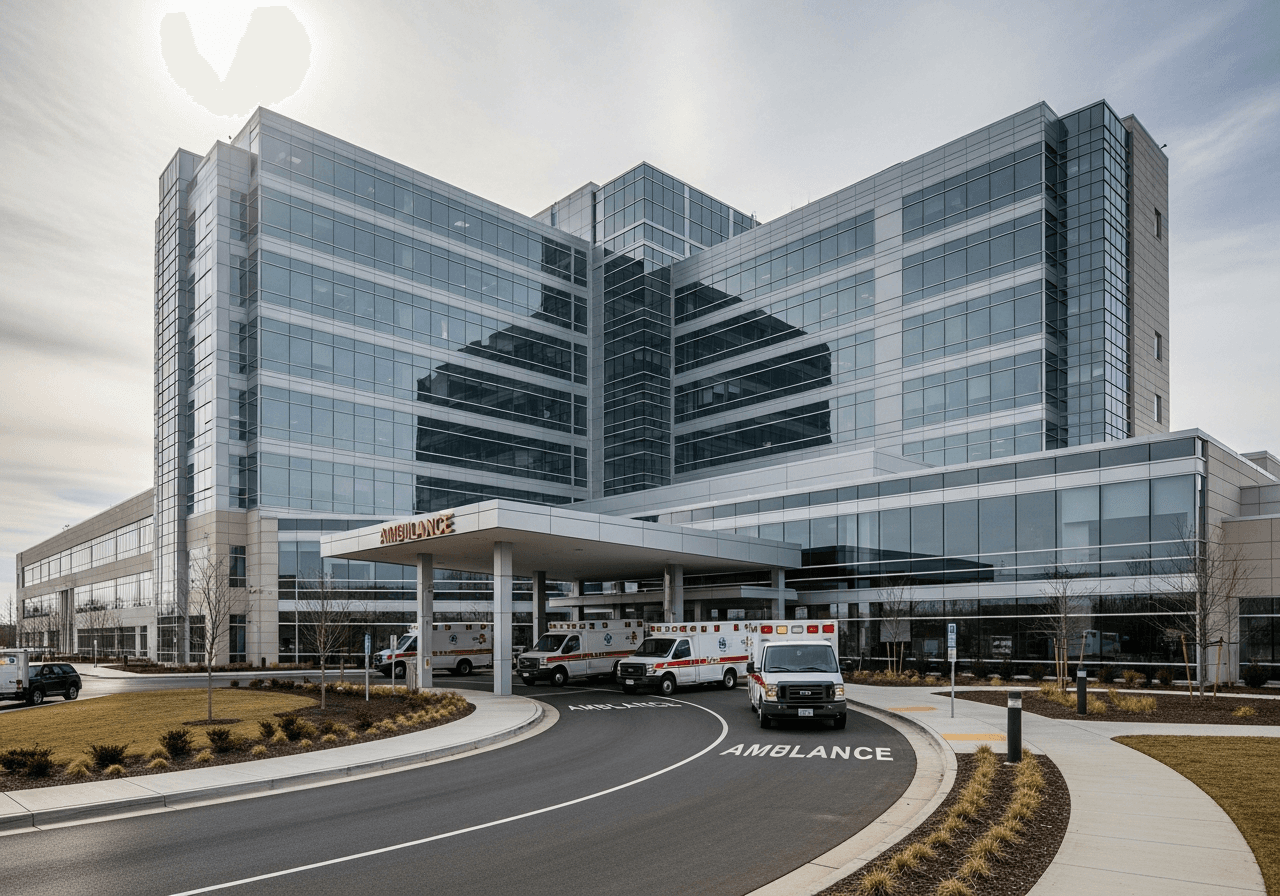
The Hospital & Medical Testing Challenge
Hospitals run drug testing across two distinct workflows that procurement often treats as separate. Human-resources testing — pre-employment for new hires, fitness-for-duty when a clinical concern arises, post-incident testing for needlestick or medication-error events — is owned by HR and bought through HR's vendor relationship. Clinical-care testing — emergency-department toxicology screens, peri-natal substance-exposure screening, urgent-care presumptive drug testing — is owned by the clinical labs and bought through laboratory supply chains. The cups themselves are largely the same; the procurement, billing, and accounting are completely separate.
The HR side has the same dynamics as any large workplace testing program: pre-employment volumes that scale with hiring rate, written policy that needs to reflect state-specific marijuana law and clinical-license-protected positions, fitness-for-duty procedures that intersect with state nursing-board and medical-board reporting obligations. The clinical side is where the volumes get large fast: a busy emergency department may run 30 to 60 toxicology screens per day, and the bottleneck is rarely the lab — it's the supply of cups at the bedside or in the ED workroom.
Hospitals are also where the cost of unreliable supply hits hardest. An ED that runs out of toxicology cups during a Friday-night shift can either send specimens to the central lab (turnaround time hours instead of minutes — bad for clinical decision-making) or skip the screen entirely (bad for documentation). HR pre-employment testing that's bottlenecked on cup supply slows hiring at exactly the moment the hospital is trying to fill nursing positions in a tight labor market. The cost of the cup is small; the cost of running out is large.
How Magenta Helps Hospitals & Medical Facilities
Magenta supplies hospitals with one wholesale account that can cover both HR pre-employment / fitness-for-duty testing and clinical-care emergency-department / peri-natal screening. Sub-account billing means HR and the central lab get their own consumption tracking and ship-to addresses while a single invoice rolls up to hospital accounts payable. The wholesale tier is set against combined hospital volume — which is typically meaningfully better than running two separate procurements at lower individual volumes.
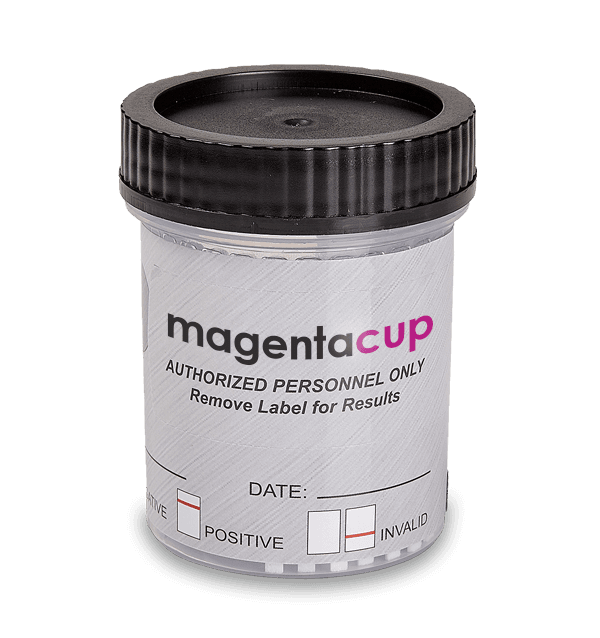
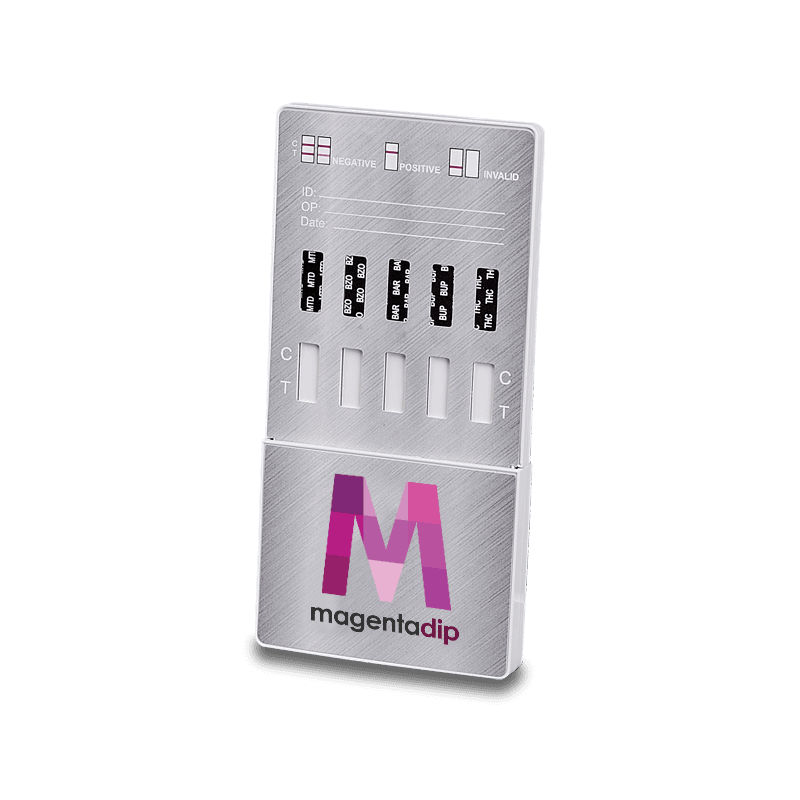
Panel selection varies by use case. For HR pre-employment and fitness-for-duty testing, the 10-panel CLIA-waived dip card and 12-panel cup are the standard workhorses, covering SAMHSA-5 plus benzodiazepines, methadone, oxycodone, MDMA, and barbiturates. For ED toxicology and peri-natal screening, hospitals increasingly standardize on 13- or 14-panel cups that add fentanyl — given fentanyl's role in current overdose presentations, an ED toxicology panel without fentanyl is missing the substance the patient most likely encountered. For specific clinical scenarios, single-analyte strips (fentanyl, ETG alcohol, kratom, K2/Spice) supplement the standard cup.
For peri-natal substance-exposure screening — a use case with significant clinical and child-protective-services implications — hospitals using maternal urine, neonatal urine, or other matrix testing should follow their state's specific reporting requirements and their hospital's written policy. Magenta supplies the urine-based screening cups; cord-tissue, meconium, or umbilical-cord testing is typically referred to specialized reference laboratories. Many hospitals use the instant cup as a presumptive screen at admission and refer positive results to the reference lab for confirmation before any clinical or CPS action.
Operationally, we are set up for hospital-scale ordering with hospital-realistic procurement. Wholesale tiered pricing reflects combined-volume scale. NET 30 invoicing on approved hospital accounts is standard. Same-day shipping on orders placed before 3pm ET means an ED that runs short Friday has resolution Monday morning. For hospitals on group purchasing organization (GPO) contracts, we work with GPO pricing structures where applicable. For recurring departmental consumption, monthly subscriptions auto-deliver at historical volume — ED workrooms and HR offices stop thinking about reorders.
Recommended Products for Hospitals
The panels and form factors hospitals & medical order most.
Compliance Considerations for Hospital Testing
Hospital testing programs operate across multiple regulatory frameworks depending on the use case. HR-side testing of clinical staff is governed by the same federal anti-discrimination law (ADA, Title VII) and state employment-testing statutes as any workplace testing program, with additional state nursing-board and medical-board reporting obligations layered on top. A nurse or physician who tests positive in a fitness-for-duty test may trigger licensure-board reporting obligations under state professional-licensing law, and the hospital's written policy needs to align with those obligations.
Clinical-care drug testing — ED toxicology, peri-natal screening, urgent-care presumptive testing — is a medical service ordered by a physician for clinical decision-making, and operates under CLIA (Clinical Laboratory Improvement Amendments) standards rather than employment-testing standards. CLIA-waived testing performed at the point of care requires the facility to hold a current Certificate of Waiver under 42 CFR 493.15, with the waiver-eligible tests run by trained personnel following the manufacturer's instructions. CLIA-waived testing produces presumptive results; definitive identification typically requires laboratory confirmation by GC-MS or LC-MS-MS at a CLIA moderate- or high-complexity certified laboratory.
Peri-natal drug testing has specific clinical, legal, and ethical considerations beyond standard clinical testing. Hospital policies should specify the clinical indications for maternal or neonatal testing, the consent and notification expectations under state law, the response to a positive result including referrals to maternal-substance-use treatment and child-protective-services reporting where required, and the documentation in both the maternal and infant medical records. Several states have specific peri-natal testing statutes; many have CPS reporting obligations triggered by neonatal exposure findings.
Confidentiality treatment varies by use case. HR testing records are personnel records subject to standard employment-records handling. Clinical testing results are medical records subject to HIPAA (and, where SUD treatment is involved, 42 CFR Part 2). Peri-natal testing results may be subject to additional state-specific confidentiality protections and additional CPS-related disclosure obligations. Hospital compliance offices should have written records-handling procedures aligned with each use case.
Key regulations and standards
- CLIA Certificate of Waiver — Required under 42 CFR 493.15 to perform CLIA-waived testing at the point of care; must be current and posted.
- Joint Commission / DNV / AAAHC — Hospital accreditation standards include point-of-care testing oversight, including drug-screening cups.
- ADA / Title VII — HR-side staff testing subject to federal anti-discrimination law; current illegal-drug use not protected, addiction history is.
- State nursing/medical board rules — Positive fitness-for-duty results for licensed clinical staff may trigger licensure-board reporting obligations.
- HIPAA / 42 CFR Part 2 — Clinical testing results are PHI; SUD treatment context adds Part 2 protections.
- State peri-natal testing / CPS reporting — State-specific statutes govern peri-natal testing consent and any CPS reporting obligations triggered by results.
Hospital testing requirements vary significantly by use case, state, and accreditation body. This information is for general guidance only — consult hospital compliance counsel for specific requirements applicable to each testing program at your facility.
"Hospitals consistently tell us the same thing: HR and the central lab were running two separate procurements for what are essentially the same cups. Consolidating onto one wholesale account with sub-account billing — HR gets its own ship-to and consumption tracking, the lab gets its own — at a wholesale tier set against combined hospital volume, recovers both per-cup cost and the procurement overhead of running two vendor relationships."
Frequently Asked Questions
Can one account cover HR testing and clinical-care testing?+
Yes — and most hospitals prefer that arrangement. One wholesale account, sub-account billing so HR and the central lab get their own ship-to addresses and consumption tracking, one invoice rolling up to hospital accounts payable. Wholesale tier is set against combined hospital volume, typically meaningfully better than running two separate procurements at lower individual volumes.
Are your cups appropriate for ED toxicology?+
Yes. Our cups are FDA-cleared and CLIA-waived for use at the point of care by trained personnel under a current Certificate of Waiver. They produce presumptive results appropriate for emergency clinical decision-making. Definitive identification — particularly for any result that will be the basis for a major clinical decision, peri-natal CPS report, or admission to a controlled-substances-related treatment service — typically requires laboratory confirmation by GC-MS or LC-MS-MS at a CLIA-certified laboratory.
What panel makes sense for an ED toxicology workflow?+
Most hospitals have moved to a 13- or 14-panel that includes fentanyl. Given fentanyl's role in current opioid-overdose presentations, an ED toxicology panel without dedicated fentanyl screening is missing the substance the patient most likely encountered. The 14-panel adds specimen-validity testing on the same cup, useful when the clinical context raises questions about specimen integrity.
Do you supply peri-natal screening cups?+
Yes — our standard 12-, 13-, and 14-panel cups are appropriate for maternal-urine peri-natal screening when used per hospital policy. Neonatal-urine screening uses the same cups with appropriate collection accommodation. Cord-tissue, meconium, and umbilical-cord testing is typically referred to specialized reference laboratories; we supply the in-house urine screening side. Hospital peri-natal testing policies should align with state-specific consent, reporting, and CPS-notification requirements.
How does CLIA-waived status affect what we can do with the result?+
CLIA-waived testing produces presumptive (qualitative) results — positive or negative for each drug class — and is appropriate for immediate clinical decision-making at the point of care. Any result that will be used for forensic purposes, major treatment decisions with significant downstream consequences, or potential litigation should be lab-confirmed by GC-MS or LC-MS-MS at a CLIA moderate- or high-complexity certified laboratory. We supply chain-of-custody forms and partner with CLIA-certified reference laboratories for confirmation when needed.
Do you support GPO pricing?+
Yes. We work with hospital GPO pricing structures where your facility procures through one (Vizient, Premier, HealthTrust, or others). Pricing can be set on the GPO contract structure or on direct wholesale pricing — whichever produces a better result for your facility. Our standard wholesale tier pricing is competitive with most GPO-contracted rates for the cup categories we supply.
What about NET 30 invoicing for hospital accounts?+
NET 30 is standard on approved hospital accounts. We provide W-9, certificate of insurance, and any other documentation your accounts-payable office requires for vendor onboarding. For very large hospital systems with extended payment terms in their standard vendor MSAs, we can discuss terms during onboarding.
What's the minimum order quantity?+
There is no minimum to open a wholesale account. Tiered pricing kicks in at 100 units of a SKU and scales meaningfully at 500 and 1,000+. Most hospital wholesale accounts qualify for the second or third tier on first order, particularly when HR testing and clinical-care testing are consolidated onto one account.
Ready to Consolidate Hospital Testing Supply?
Wholesale pricing, NET 30 terms, GPO-compatible structures, sub-account billing for HR and clinical-lab use cases, and fentanyl-inclusive panels for current ED toxicology workflows.
Related Industries
Workplace HR
Pre-employment, random, and post-incident testing supplies for businesses of any size.
Explore →Rehab Centers
High-volume monitoring with chain-of-custody options for residential and outpatient treatment programs.
Explore →Pain Clinics
Compliance-grade urine drug monitoring for opioid management, prescription adherence, and patient safety.
Explore →Methadone Clinics
SAMHSA-compliant 8-times-per-year random testing supplies for opioid treatment programs.
Explore →