
Drug Testing Supplies for Opioid Treatment Programs
SAMHSA-aligned testing kits for methadone clinics and other OTPs — built for the minimum 8-times-per-year random testing requirement, fentanyl-aware panels, and the documentation burden 42 CFR Part 8 actually creates.

The OTP Drug Testing Challenge
Opioid Treatment Programs operate under one of the most prescriptive drug-testing requirements in healthcare. 42 CFR Part 8 requires every OTP to conduct at least eight random drug tests per patient per year, with specific documentation requirements around random selection, results review, and clinical response. A mid-sized OTP serving 500 patients is running 4,000+ random tests per year on top of admission tests, take-home-privilege tests, and any clinically-indicated tests. The supply spend is real and the documentation burden is constant.
What makes OTP testing distinct from general addiction treatment is the panel design problem. The point of testing is not just to detect illicit use — it's to monitor patient response to medication-assisted treatment, support clinical decision-making about take-home privileges, and document treatment fidelity in a way that satisfies SAMHSA accreditation and DEA expectations. A patient stable on methadone for two years with consistent negative urines for illicit opioids has earned a different take-home schedule than a patient with intermittent positives, and the testing record is what justifies that clinical decision.
OTPs have also been on the front line of the fentanyl crisis. A program that's testing on a standard opiate panel without dedicated fentanyl screening is missing the substance that's driving most opioid overdose deaths in the US. Fentanyl doesn't cross-react with the standard morphine-based opiate immunoassay, so a patient using fentanyl can test negative on a 12-panel that doesn't include fentanyl as a separate analyte. Programs are increasingly standardizing on 13- or 14-panel cups that include fentanyl, plus separate xylazine strips for regions where xylazine adulteration is endemic.
How Magenta Helps Opioid Treatment Programs
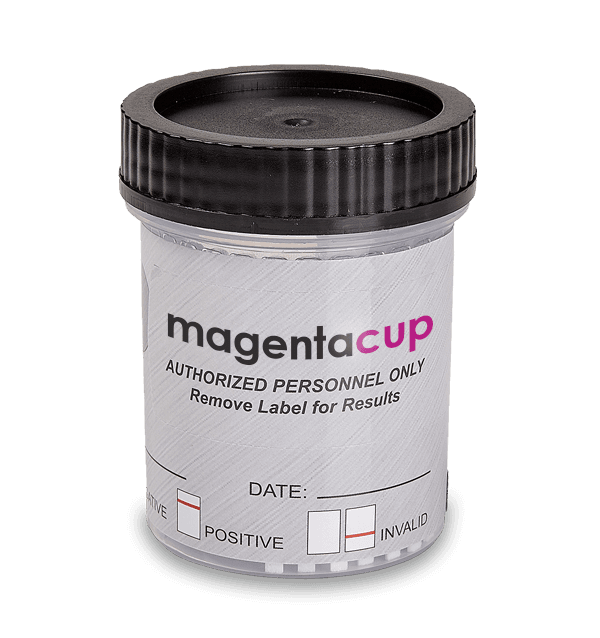
Magenta supplies OTPs with the testing kits the 42 CFR Part 8 random-testing requirement actually needs, in volumes that reflect program math. For most OTPs, the 13-panel cup with fentanyl is the standard workhorse — it covers the SAMHSA-5, benzodiazepines, methadone, oxycodone, buprenorphine, MDMA, and barbiturates, plus a dedicated fentanyl analyte window, on a single CLIA-waived cup. Programs that need specimen-validity testing on the same cup move to our 14-panel with fentanyl and adulterants. Programs serving patient populations with significant cocaine or methamphetamine co-use add separate confirmations as needed.
For OTPs operating in regions with significant xylazine ("tranq") adulteration of the fentanyl supply, we stock harm-reduction xylazine single-strip tests that can be run alongside the standard cup. These are not CLIA-waived for clinical decision-making in most jurisdictions but are useful for harm-reduction counseling and overdose-risk assessment. Same goes for our fentanyl single-strip harm-reduction tests, which some programs use as patient-facing educational tools in conjunction with counseling.
On the operations side, we are set up for the volumes OTPs actually order. A 200-patient program running the minimum 8 random tests per patient per year is ordering 1,600+ cups annually, plus admission and clinically-indicated tests; a 500-patient program is ordering 4,000+. Our wholesale tiered pricing reflects that volume — most OTPs qualify for the second or third tier on first order. NET 30 terms are standard for approved accounts. Recurring monthly subscriptions auto-ship at historical volume with an additional 5-10% off, eliminating the reorder paperwork entirely. Same-day shipping on orders placed before 3pm ET means an emergency reorder during a high-acuity week has resolution next business day.
OTPs that confirm select results at a reference lab can source chain-of-custody forms and laboratory confirmation through our partner network, including SAMHSA Federal CCFs for any result that may end up in a court or custody proceeding. Programs with existing lab relationships buy kits-only at the same wholesale pricing.
Recommended Products for OTPs
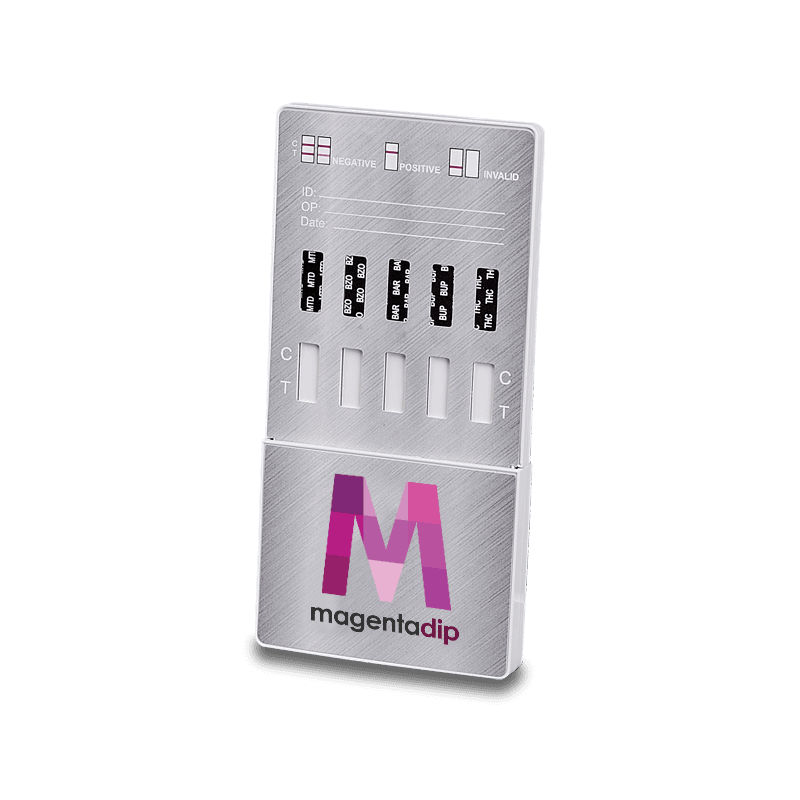
The panels and form factors methadone clinics order most.
Compliance Considerations for OTPs
Opioid Treatment Programs operate under 42 CFR Part 8 — the SAMHSA regulation that governs all federally-certified OTPs dispensing methadone, buprenorphine in OTP settings, and other approved medications for opioid use disorder. The drug-testing requirement, found in 42 CFR 8.12(f)(6), requires every OTP to conduct "at least eight random drug tests per year per patient" and to document the results in the patient record. The recent 2024 rulemaking changes preserved the eight-test minimum while giving programs more flexibility on the specific testing schedule and panel composition based on clinical judgment.
Beyond the random-testing minimum, OTPs use drug testing to support take-home medication decisions under 42 CFR 8.12(i). The take-home schedule, originally tightly prescribed by time-in-treatment criteria, was substantially loosened in the 2024 rule revision — programs now have significant clinical-judgment authority to grant take-homes earlier in treatment for stable patients. The medical director's documented assessment, which typically includes recent drug-testing history showing absence of illicit drug use, is the central justification for take-home decisions and the central documentation reviewed in SAMHSA accreditation surveys.
On patient privacy, 42 CFR Part 2 — the federal confidentiality of substance-use-disorder treatment records — applies to all OTP records, including drug-testing results. Part 2 is stricter than HIPAA: results cannot be released to courts, employers, drug courts, family members, or other providers without specific written consent that meets Part 2's requirements, or one of the narrow exceptions (medical emergency, properly-issued court order specifically addressing Part 2 records). The 2024 Part 2 rule update aligned Part 2 more closely with HIPAA in some areas but retained the core consent requirement for most disclosures.
OTPs are also subject to DEA registration requirements under the Controlled Substances Act because methadone is a Schedule II controlled substance and buprenorphine is Schedule III. DEA expectations regarding drug-diversion controls, including documented drug-testing programs and clinical response to aberrant results, are part of OTP-specific DEA compliance. State opioid treatment authorities add a third layer of state-specific licensure requirements on top of federal SAMHSA certification and DEA registration.
Key regulations and standards
- 42 CFR Part 8 — SAMHSA regulation governing all federally-certified OTPs — minimum 8 random drug tests per patient per year, take-home medication criteria, accreditation.
- 42 CFR Part 2 — Federal confidentiality of substance-use-disorder treatment records — applies to all OTP drug testing results.
- Controlled Substances Act / DEA — OTPs must hold DEA registration for the controlled substances they dispense; diversion-control expectations include documented drug-testing programs.
- CLIA Certificate of Waiver — Required to perform waived testing in OTP settings; must be current and posted.
- SAMHSA accreditation — OTPs must maintain accreditation by a SAMHSA-approved body (CARF, Joint Commission, COA, others) — drug-testing documentation is a survey focus.
- State opioid treatment authority — State-specific licensure requirements on top of federal SAMHSA certification — testing-frequency overlays vary by state.
OTP requirements were substantially revised in the 2024 SAMHSA rulemaking and continue to be the subject of state-by-state interpretation. This information is for general guidance only — consult qualified healthcare counsel and your SAMHSA accreditation body for specific requirements applicable to your program.
"OTP programs consistently tell us the same thing: the chemistry of the test isn't the bottleneck, the volume is. A 500-patient program running the minimum 8 random tests per patient per year — plus admission, take-home, and clinically-indicated tests — is north of 5,000 cups annually. Consolidating that onto a single SKU at the right wholesale tier, with fentanyl on the cup so you're not also tracking separate dip strips, makes the medical director's documentation burden lighter and the program administrator's reorder cycle shorter."
Frequently Asked Questions
What does 42 CFR Part 8 require for OTP drug testing?+
42 CFR 8.12(f)(6) requires every federally-certified OTP to conduct at least eight random drug tests per patient per year, with results documented in the patient record. The 2024 rule update preserved the eight-test minimum while giving programs additional flexibility on the specific schedule and panel composition based on clinical judgment. The minimum is a floor — many programs test more frequently for patients early in treatment or after aberrant results, with the frequency tapering as the patient stabilizes.
Should our OTP panel include fentanyl?+
For most OTPs, yes. Fentanyl does not cross-react with the standard morphine-based opiate immunoassay, so a patient using fentanyl can test negative on a 12-panel that doesn't include fentanyl as a dedicated analyte. Given fentanyl's role in current overdose mortality, most OTPs have moved to 13- or 14-panel cups that include fentanyl on the same cup. Programs in regions with significant xylazine adulteration may also use harm-reduction xylazine strips alongside the standard cup.
Are CLIA-waived cup results enough for take-home medication decisions?+
The CLIA-waived cup result is a screening result that is clinically useful for ongoing monitoring and supports the medical director's documented take-home assessment. For any individual aberrant result that will significantly affect treatment — such as suspending take-homes that have already been granted, or denying take-homes that would otherwise be granted — many programs lab-confirm the aberrant result before acting. Document the rationale and the confirmation result in the patient record.
How do the 2024 Part 8 changes affect take-home medication?+
The 2024 SAMHSA rule revision substantially loosened the time-in-treatment criteria that previously governed take-home medication and gave OTP medical directors more clinical-judgment authority. Programs can grant take-homes earlier in treatment for patients judged stable, with the medical director's documented assessment — typically including recent drug-testing history showing absence of illicit drug use — as the central justification. This makes the drug-testing documentation more clinically important, not less, even as the calendar-based criteria have loosened.
Do we need observed collections for random tests?+
42 CFR Part 8 does not require all OTP random tests to be observed, but program policies typically require observed collection in defined circumstances: after an aberrant result, at the start of treatment, when there is reason to believe the patient may attempt to alter the specimen, or per state opioid treatment authority requirements. Most programs use unobserved collection as the default with documented criteria for moving to observed collection. Specimen-validity testing (creatinine, pH, oxidants) on the cup provides a check on unobserved collections.
How does 42 CFR Part 2 affect releasing test results?+
42 CFR Part 2 — the federal confidentiality regulation for SUD treatment records — is stricter than HIPAA and applies to all OTP drug-testing results. Results cannot be released to courts, drug courts, employers, family members, or even other healthcare providers without specific written consent meeting Part 2's requirements, or one of the narrow exceptions (medical emergency, properly-issued court order that specifically addresses Part 2 records). The 2024 Part 2 rule update aligned some areas with HIPAA but retained the core consent requirement.
What's the minimum order quantity for OTP pricing?+
There is no minimum to open a wholesale account. Tiered pricing kicks in at 100 units of a SKU and scales meaningfully at 500 and 1,000+. A typical 200-patient OTP runs the minimum 8 random tests per patient per year (1,600 cups) plus admission, take-home, and clinically-indicated tests — most qualify for the second or third tier on first order. A 500-patient program ordering 4,000+ cups per year qualifies for the highest tier.
Do you support reference-lab confirmation?+
Yes — our partner lab network supplies chain-of-custody forms, HHS-certified laboratory confirmation by GC-MS or LC-MS-MS, and MRO services. For any result that may end up in a drug court report, custody proceeding, or other legal context, we recommend documented forensic chain of custody — the SAMHSA Federal CCF is one widely-used option; many programs use a court-aligned form preferred by their local drug court. Programs with existing lab relationships buy kits-only at the same wholesale pricing.
Ready to Stock Your OTP?
Wholesale pricing, NET 30 terms, and same-day shipping on the panels OTPs actually need — including fentanyl-on-cup options that match the substances driving today's overdose mortality.
Related Industries
Rehab Centers
High-volume monitoring with chain-of-custody options for residential and outpatient treatment programs.
Explore →Pain Clinics
Compliance-grade urine drug monitoring for opioid management, prescription adherence, and patient safety.
Explore →Sober Living
Affordable abstinence-monitoring tests for sober living houses and recovery residences.
Explore →Hospitals & Medical
Staff testing, emergency-department toxicology, and outpatient-clinic supplies for hospitals and medical facilities.
Explore →