
Drug Testing for Pain Management Practices
Compliance-grade urine drug monitoring for chronic opioid therapy, PDMP-aligned prescribing, and patient-adherence verification. Built for the volume and documentation pain practices actually need.
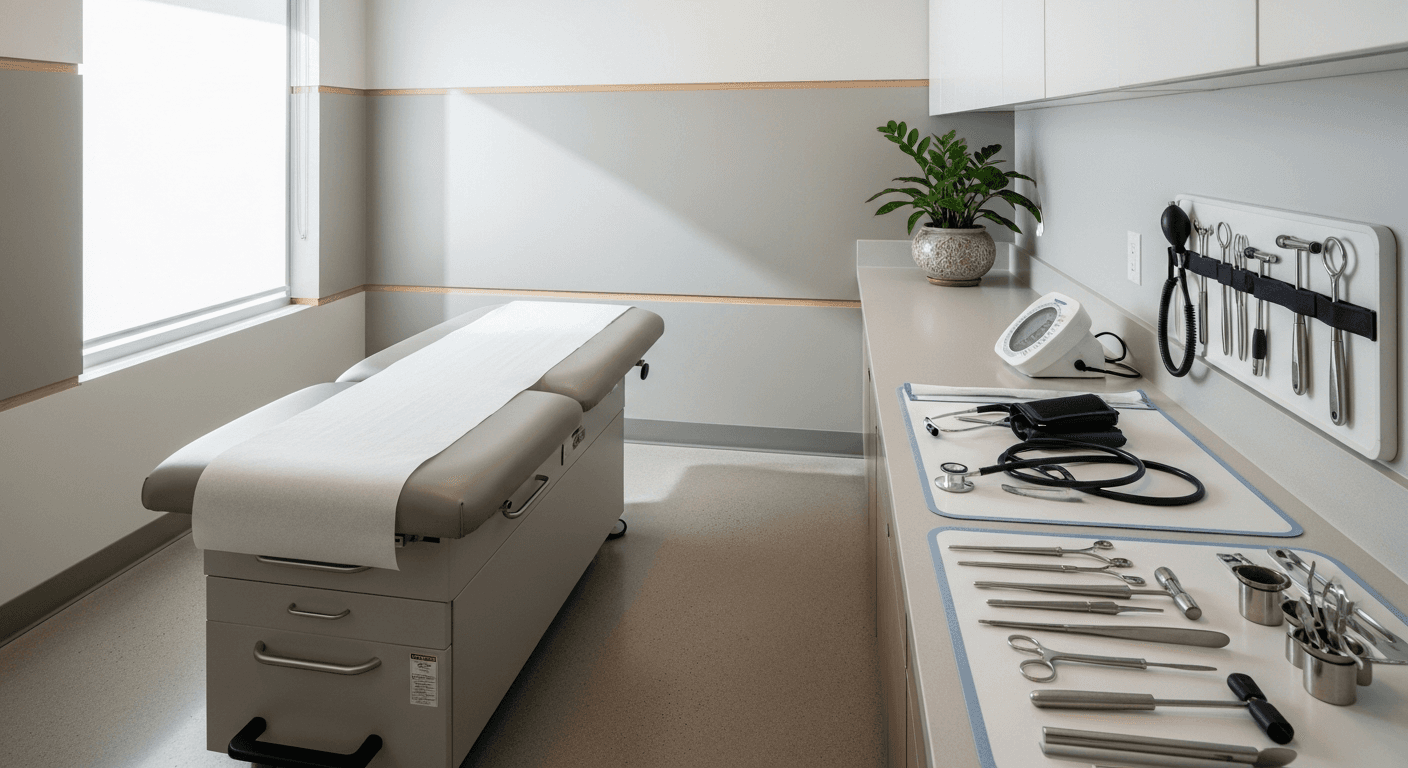

The Pain Clinic Drug Testing Challenge
Pain management practices live at the intersection of clinical care and regulatory scrutiny. A single physician prescribing chronic opioid therapy to 200 to 600 patients is running a documentation operation as much as a clinical one — every prescription requires a current PDMP query, every patient on a long-term opioid agreement needs documented urine drug monitoring (UDM) at intervals appropriate to risk stratification, and every aberrant result needs a documented clinical response in the chart. The CDC's 2022 Opioid Prescribing Clinical Practice Guideline, state medical board rules, and DEA expectations all converge on the same point: if you prescribe controlled substances chronically and you can't show your monitoring, your prescribing is exposed.
The supply problem most pain clinics describe sits on top of that workload. A typical mid-sized practice orders cups in three different SKUs because different providers prefer different panels — one likes 12-panel with adulterants, one likes the 10-panel, one wants fentanyl in everything. The chain-of-custody forms come from a separate vendor. The clinic uses an outside reference lab for confirmation but the lab requires its own requisition form, which means the medical assistant collecting the specimen is reconciling three different pieces of paperwork per patient. None of this is hard, but it adds up to 10 to 15 minutes per UDM that doesn't need to be there.
Pain practices also have a panel-design problem that other industries don't. The point of monitoring is not to catch illicit drug use (though that matters) — it's to confirm the prescribed medication is present in the specimen and that no non-prescribed controlled substances are. A panel that screens for opiates but not specifically for the oxycodone, hydromorphone, or fentanyl the patient is actually prescribed will produce a presumptive negative for a patient who is appropriately taking their medication. Pain practices need cups designed to confirm prescribed therapy — separate analyte windows for oxycodone, methadone, buprenorphine, and fentanyl — not just the historic SAMHSA-5.
How Magenta Helps Pain Clinics
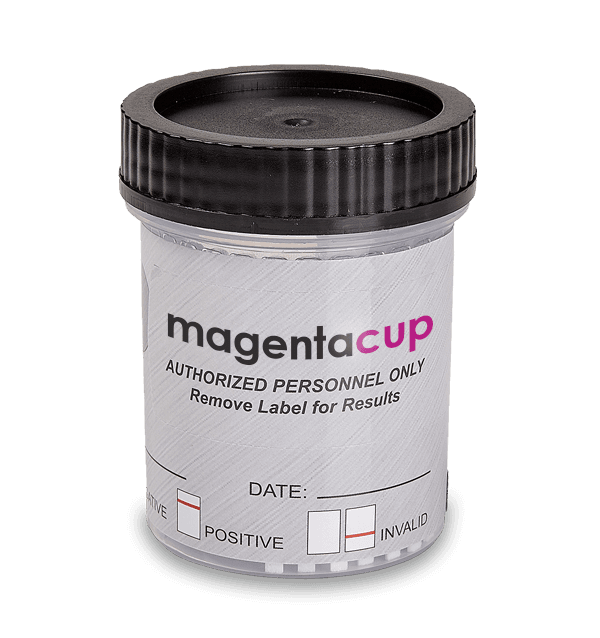
Magenta supplies pain management practices with cups designed for the actual job — confirming prescribed controlled-substance therapy and detecting non-prescribed substances on the same panel. Our 12-panel CLIA-waived cup with three adulterant strips covers the standard amphetamines, cocaine, marijuana, opiates, and phencyclidine, plus dedicated windows for benzodiazepines, methadone, oxycodone, buprenorphine, MDMA, and barbiturates, plus specimen-validity testing (creatinine, pH, oxidants) on the same cup. That's one SKU that handles the great majority of UDM workflows for a chronic-pain practice.
For practices managing fentanyl-prescribed patients or operating in states with high fentanyl-related mortality, our 13- and 14-panel cups add fentanyl screening on the same cup — eliminating the need for a separate fentanyl dip strip and a separate inventory line. For practices that confirm everything at the reference lab and use the in-office cup as a screening triage, we also stock 10-panel dip cards at a lower per-test cost. All cups are CLIA-waived under 42 CFR 493.15, which means any practice with a current Certificate of Waiver can run them.
On the operations side, our wholesale account structure is designed for the way pain practices actually buy. Tiered pricing scales with monthly volume — a five-physician practice running 200 UDMs per month is at a meaningfully better unit price than a solo practice running 30. NET 30 terms on approved accounts mean the practice administrator isn't approving expense reports for cup orders. Same-day shipping on orders placed before 3pm ET means a Friday-afternoon "we're out of 12-panels" situation has resolution Monday morning. Recurring monthly subscriptions auto-ship at the volume the practice has historically used, with an additional 5-10% discount applied — most practices set them up after the third or fourth standalone order and stop thinking about it.
For practices that also need reference-lab confirmation, our partner lab network supplies the chain-of-custody forms aligned to the lab's requisition format, GC-MS or LC-MS-MS confirmation, and MRO services if needed. Practices with existing lab relationships buy kits-only at the same wholesale pricing — there's no kits-plus-lab requirement.
Recommended Products for Pain Clinics
The panels and form factors pain clinics order most.
Compliance Considerations for Pain Clinics
Pain management practices prescribing controlled substances chronically operate under several overlapping frameworks. The DEA's general duty under 21 CFR 1306.04 — that every controlled-substance prescription must be issued for a legitimate medical purpose by a practitioner acting in the usual course of professional practice — is enforced in part by reference to whether the practice followed contemporaneous clinical standards. The CDC's 2022 Clinical Practice Guideline for Prescribing Opioids for Pain, while not binding regulation, has been adopted into state medical board rules and is treated as the prevailing clinical standard in most enforcement and licensure proceedings.
State medical board rules vary but converge on common requirements for chronic opioid prescribing: a written opioid treatment agreement signed by the patient, a documented current PDMP (Prescription Drug Monitoring Program) query at defined intervals (initial prescribing, every prescription or every 90 days depending on state), a defined risk-stratification process (often using validated tools like ORT or SOAPP), and documented urine drug monitoring at intervals tied to risk level — typically at minimum annually for low-risk patients, every 3 to 6 months for moderate-risk, and at least quarterly for high-risk or after any aberrant behavior.
Urine drug monitoring in a pain practice serves a specific clinical purpose distinct from forensic testing: it confirms patient adherence (prescribed medication is present), detects non-prescribed controlled substances or illicit drugs, and provides a documented clinical data point that supports continued prescribing. The clinical response to a UDM result needs to be documented in the chart — a negative for the prescribed opioid prompts a patient conversation about diversion, lost dosing, or other explanations; a positive for a non-prescribed opioid or illicit drug triggers a defined response per the treatment agreement (counseling, referral, tapering, discontinuation). Documentation of the result and the clinical response is the part that actually matters in a DEA inspection or medical-board complaint.
Specimen validity matters in pain-practice UDM specifically because of the clinical-care implications. A specimen with abnormally low creatinine or abnormal pH may not reflect the patient's actual medication adherence. CLIA-waived cups with built-in specimen-validity testing (creatinine, pH, oxidants) flag these specimens at the point of collection — letting the clinical team have an immediate conversation with the patient or recollect under observation — rather than discovering the issue days later when the lab reports specimen-validity flags on a confirmation.
Key regulations and standards
- DEA 21 CFR 1306.04 — Legitimate medical purpose / usual course of professional practice — the general duty for all controlled-substance prescribing.
- CDC 2022 Opioid Prescribing Guideline — Prevailing clinical standard for chronic opioid prescribing, adopted into many state medical board rules.
- State PDMP requirements — State-specific rules on Prescription Drug Monitoring Program queries — typically required before prescribing and at defined intervals.
- State medical board chronic-pain rules — State-specific requirements on treatment agreements, risk stratification, UDM frequency, and chart documentation.
- CLIA Certificate of Waiver — Required under 42 CFR 493.15 to perform waived testing in a clinical setting; must be current and posted.
- HIPAA — Pain practice UDM results are PHI and must be handled under HIPAA's Privacy and Security Rules — including handling of lab-confirmation reports.
Pain-practice prescribing requirements vary significantly by state and are subject to ongoing rulemaking at federal and state levels. This information is for general guidance only — consult qualified healthcare counsel and your state medical board for specific requirements applicable to your practice.
"Pain practices consistently tell us the same thing: the per-cup cost is not the problem. The problem is that the practice administrator is managing three SKUs from one vendor, chain-of-custody forms from another, and a reference-lab relationship that requires a third form, on top of the PDMP query and treatment-agreement documentation for every patient. Consolidating cups, forms, and (optionally) lab confirmation onto one wholesale account is what actually moves the operational needle."
Frequently Asked Questions
What panel should a pain clinic use for UDM?+
Most pain practices standardize on a 12-panel with adulterants, which covers the standard SAMHSA-5 plus benzodiazepines, methadone, oxycodone, buprenorphine, MDMA, and barbiturates, with specimen-validity testing on the same cup. Practices managing fentanyl-prescribed patients or operating in high-fentanyl regions should consider a 13- or 14-panel that adds fentanyl. The exact panel should be chosen to match what your patient population is prescribed and what non-prescribed substances are clinically relevant to detect.
How often should we run UDM on chronic-opioid patients?+
Frequency should be tied to documented risk stratification and your written treatment agreement. Common practice based on the CDC 2022 Guideline and state medical board rules: at minimum annually for low-risk patients, every 3 to 6 months for moderate-risk, and at least quarterly (with random additional testing) for high-risk patients or any patient after an aberrant result. Document the rationale for the chosen frequency in the chart.
Are CLIA-waived cup results enough, or do we need lab confirmation?+
Instant CLIA-waived cup results are screening results and are clinically useful for an immediate conversation with the patient at the visit. For any result that will be used to make a significant clinical decision — particularly tapering, discontinuation, or referral — lab confirmation by GC-MS or LC-MS-MS is the clinical and medico-legal standard. Most pain practices use the in-office cup as triage and confirm aberrant or unexpected results at the reference lab. Many also confirm a defined percentage of routine results as quality control.
Do you support reference-lab confirmation?+
Yes — our partner lab network supplies chain-of-custody forms aligned to lab requisitions, CLIA-certified reference-laboratory confirmation by GC-MS or LC-MS-MS, and MRO services if your practice uses one. We also fully support practices that already have a reference-lab relationship — buy kits-only at the same wholesale pricing, no lab bundle required.
What's the difference between definitive and presumptive UDM?+
Presumptive (qualitative) UDM is the instant immunoassay screen — the cup or dip card that gives a positive/negative result for each drug class. Definitive (quantitative) UDM is the GC-MS or LC-MS-MS lab test that identifies the specific drug or metabolite and reports a concentration. For billing and clinical purposes, presumptive and definitive UDM are separate CPT codes (presumptive: 80305-80307; definitive: G0480-G0483 or 80307+). Documentation should specify which type of test was ordered and the clinical rationale.
How do you handle a patient who tests negative for their prescribed opioid?+
A negative for the prescribed opioid is an aberrant result that needs a documented clinical response. Common interpretations: the patient is not taking the medication (diversion concern), the patient took the last dose long enough ago that it has cleared the detection window, the cup didn't include the specific analyte being prescribed (e.g., testing for opiates without a dedicated oxycodone window), or a specimen-validity issue affected the result. The clinical response should be documented in the chart per your treatment agreement. Lab confirmation with quantitative results is usually warranted before any major clinical decision.
Can fentanyl be detected on a standard opiate panel?+
No. Fentanyl is a synthetic opioid that does not cross-react with the standard opiate immunoassay (which detects morphine, codeine, and their metabolites). Fentanyl detection requires a dedicated fentanyl analyte window. Our 13-panel and 14-panel cups include fentanyl on the same cup as the standard panel, eliminating the need for a separate dip strip.
What's the minimum order quantity for pain-clinic pricing?+
There is no minimum to open a wholesale account. Tiered pricing kicks in at 100 units of a SKU and scales at 500 and 1,000+. A typical single-physician chronic-pain practice runs 80 to 150 UDMs per month and qualifies for the first wholesale tier on their first order. Multi-physician practices typically run 300 to 800+ per month and hit the second or third tier.
Ready to Consolidate Your UDM Supply?
Wholesale pricing, NET 30 terms, and same-day shipping on the panels pain practices actually need — with optional reference-lab confirmation on the same account.
Related Industries
Rehab Centers
High-volume monitoring with chain-of-custody options for residential and outpatient treatment programs.
Explore →Methadone Clinics
SAMHSA-compliant 8-times-per-year random testing supplies for opioid treatment programs.
Explore →Hospitals & Medical
Staff testing, emergency-department toxicology, and outpatient-clinic supplies for hospitals and medical facilities.
Explore →Workplace HR
Pre-employment, random, and post-incident testing supplies for businesses of any size.
Explore →